




Talking Ministry in 2026 with Jonathan Smith and Drake Farmer
For years, the narrative in Canada was slow decline, polite disengagement, and post-Christian skepticism.
But that’s not the story they’re living right now.
There are people from every background actually exploring faith and showing up at church. What’s going on in Canada?
We’re doing something a little different in this episode of the podcast. Sean and I invited our Canadian consultants, Jonathan Smith and Drake Farmer, to introduce themselves and talk about what they’re seeing in the “big C Church” in Canada.
In this episode, we have a conversation about the real spiritual hunger emerging across Canada, how a strong invitational culture and posture of hospitality are becoming the new front door, and what to be ready with when your growth is outpacing your resources.
People are testing community, not theology. [episode 433] #unstuckchurch Share on X Hospitality is becoming a discipleship strategy. [episode 433] #unstuckchurch Share on X There is a hunger growing in people for meaning. [episode 433] #unstuckchurch Share on X Are you creating spaces where people can belong before they believe? [episode 433] #unstuckchurch Share on X

This Episode Is Brought to You By Tyndale
As ministry leaders, you are walking with people through anxiety, grief, conflict, and big questions every week. The HelpFinder Bible is a simple, practical tool to help you point them to Scripture. Its unique HelpFinder Index includes more than 100 life topics—so whether someone is struggling with stress, relationships, or doubt, you can turn straight to relevant verses that speak to their situation. Find God’s answers to life’s questions—check out HelpFinderBible.com.
Get the Leader Conversation Guide
Opt-in here and get access to the Leader Conversation Guide for this episode and to the full archive. Emailed each Wednesday.
Share Your Thoughts and Questions on Social Media
We use hashtag #unstuckchurch on X @unstuckgroup and on Instagram @theunstuckgroup.
Write a Review—It Helps!
Your ratings and reviews really do help more pastors discover the podcast content we’re creating here. Would you take a minute to share your thoughts? Just open the podcast on iTunes on your phone or computer, click Ratings & Reviews, and leave your opinion. Or leave us 5 stars on Spotify.
Transcript
Sean:
As a ministry leader, you’re walking people through anxiety, grief, conflict and big questions every single week. The HelpFinder Bible is a simple and practical tool to help you point them to scripture. Its unique HelpFinder Index includes more than 100 life topics—so whether someone is struggling with stress, relationships or doubt, you can turn straight to relevant verses that speak to their situation. To learn more, go to HelpFinderBible.com. That’s HelpFinderBible.com.
Welcome to the Unstuck Church Podcast. I’m Sean here again with Amy Anderson. And Amy, today’s podcast is a bit different, but something we’ve really been looking forward to for a lot of reasons.
Amy:
Yeah, we really have. And it’s not just because we get to introduce a couple of great consultants from our team, but also because both of them lead churches in the great country of Canada.
Sean:
They sure do. You know, I don’t know if our listeners know this, but we work with a number of Canadian churches, and that’s actually how we met both Drake and Jonathan. They were unstuck clients first before they became consultants on our team.
Amy:
Both were great leaders, are great leaders leading in great churches, but they’re also strategically wired. So they’re gifted, gifted thinkers and good at one of the things that’s most important to us when we engage with churches, and that’s making ministry actionable and very practical. So let’s dive in and let Jonathan and Drake introduce themselves and hear more about what they’re seeing in the Big C Church in Canada. So here’s my conversation with Unstuck consultants, Jonathan Smith and Drake Farmer.
Well, I’m very excited to have two of my friends on the call today, and they are from Canada, eh? And I think we have the East Coast and the West Coast covered, but Jonathan Smith and Drake Farmer is here today. They’ve both been consultants with us for a while. So can you just start by introducing yourself? Tell me what your day job is and how long you’ve been a part of the Unstuck Team, and Drake, I’ll start with you.
Drake:
Yeah, perfect. I am executive pastor of Ministries at Beulah Alliance Church in Edmonton, Alberta. And I’ve been a part of the Unstuck team a little over two years now.
Amy:
Great. And Jonathan?
Jonathan:
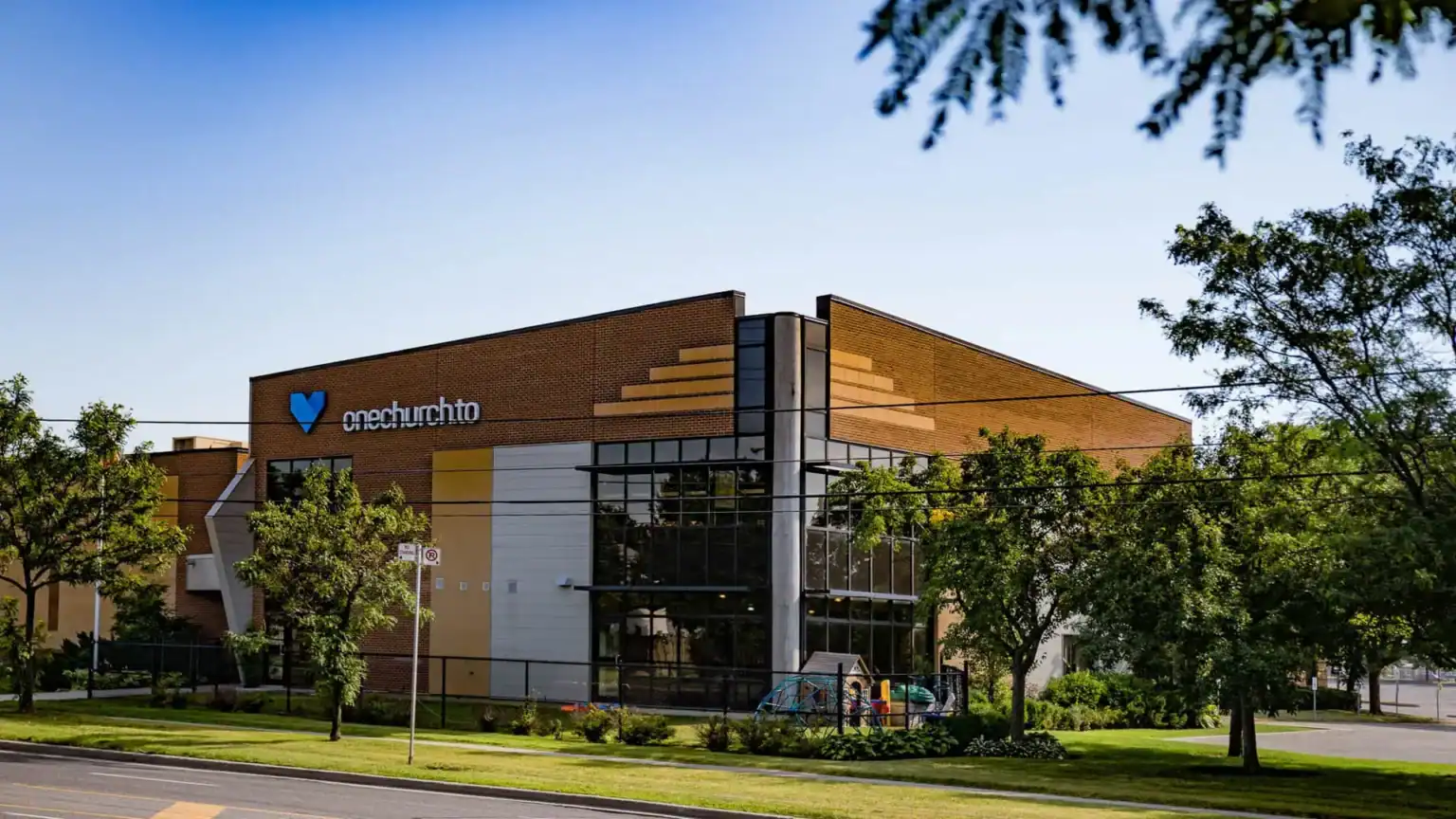
Yeah. I’m the lead pastor at OneChurch.to in Toronto, Ontario. And I think I joined the Unstuck team in March of this year. But I was on the advisory committee before that, and I was a client of yours before that.
Amy:
Yes. You were, I didn’t get the privilege of serving One Church. I think you had Tony and was Sarah there for staffing and structure? Well, you were in good. It was all Tony.
Jonathan:
It was all Tony.
Amy:
Oh, he did staffing and structure?
Jonathan:
He did everything with us. Yeah.
Amy:
I’ll have to go back and look at those notes.
Jonathan:
It was COVID.
Amy:
That’s right. It was in COVID. That’s right. I remember. Yeah. Well, you did some amazing things through COVID. We had you on either our podcast or our webinar. Just your story inspired a lot of churches out there. I’d love to hear from you both. Where is your church winning right now? What’s going well for you? And again, Drake, I’ll start with you. I’d love to hear what you’re doing and what’s working.
Drake:
Yeah, I mean, we worked with you guys, worked with Tony, looking at really solidifying what our playbook is and our kind of clarity towards multisite. And that’s been great in bringing our whole team kind of aligned in where we’re headed and we’re launching our fifth campus in the fall.
Amy:
Wow.
Drake:
But what’s been more exciting for us here is just seeing how God has been moving, how the spirit has been moving in people’s lives. Like we have people that are going on chat GPT and searching, like, where should I go to church? And our church is popping up in their searches or obviously as disciple makers are out and inviting and being a part of people’s lives that they’re coming and we’re seeing people driving by and just the spirits leading them to just, I don’t know why, but I wanted to come to church. I wanted to check this out. And people who have no background, have never been to church.
People that are moving from all over the world, coming here to Edmonton, we’re just seeing a flood of people for the first time experiencing church the first time experiencing the gospel, first time experiencing Jesus, and we’re just trying to ride the wave, figuring out how to shore up a lot of our processes and especially our discipleship pathway with this flood of people being able to just help them connect, get into serving team, obviously, and community and a discipleship relationship. It’s just been amazing to see this kind of explode and Alpha’s been a huge part of that for us. And yeah, it’s just been awesome.
Amy:
Gosh, you know, I feel like I just want to stick here for a minute because it’s so interesting. You know, when I joined the Unstuck Group back in 2016 and served some churches in Canada, that just wasn’t the story. It was a lot of post-Christian challenges, all of this. And in the states here this year, I have just seen that revival. I have seen all of these people coming to church. And to know that it’s happening in Edmonton, too, is just absolutely amazing.
I want to ask one more question. You talked about kind of working with us on your multi-site process and putting your playbook together for our listeners, the playbook is just a document that really you move from oral tradition to written. And you talk about decision rights and you talk about, this is our ministry model. Was that hard work to kind of take a step back in the midst of being a multisite church? Because now you’re ready to launch again, so you must have done some good things and got on the track to gain momentum and go again.
Drake:
Yeah. A lot of it’s cultural. A lot of it is things that depending on what was, well, I’ll put it this way, if you don’t have clarity, then people will fill in that clarity for that. And what they think multi-site is and isn’t in a different campus and have different perspectives and different ways. You know, there was a merger in one, there was a launching of another, there was different, all these different pieces and bringing that alignment. So some of it was understanding some of the work that we did with Unstuck that helped us kind of fast forward that. But a lot of it was just getting the stakeholders in a room and working that out for that clarity. Knowing how is this shaping, what’s the change management? Where’s everybody at on this journey? And helping kind of move that forward and really bringing a, we’re at a place where we have a conviction and a lot now is our standard operating procedures and our systems and our processes and how does this work out in that change management. But we’re seeing great success on that, which has been amazing. But a lot has just been that culture building that, you know, this is the lens that we see things through. I constantly have staff, especially our campus pastors and our central ministry referring back to and saying, you know, this is great because I can go back and go, oh no, I’m the one that makes that decision. Or, oh, this is how this works, because we have that declared and written down. So it’s been huge. And it’s to continue so we can focus on what’s most important instead of having to always figure out what’s what in every situation.
Amy:
Yeah. We often say clarity is king in the multisite world. And that’s the hard work that you did. Well, and that’s exciting. You’re launching a new location. Jonathan, let me flip over to you. Sure. Over in Toronto, Ontario, what’s going well? What’s going well at your church? Where are you winning?
Jonathan:
Yeah, I think we’re winning with unchurched and de-churched people. It’s funny, I think a good illustration this last weekend, I met a woman in the lobby. Her name was Zareen. And she caught my eye. She wanted to talk, and her Muslim neighbor had invited her to attend our church. I said, “Do tell, I really want to hear this story.” And her neighbor had come through our food bank. We serve over a thousand people every week. And many of them new to Canada. And then we stacked into it because we do a thing around here called stackable is a bit of our flywheel internally to build momentum. And we stacked into that sports programs, arts programs for their kids. So the parent, this Muslim lady brought her children to these programs, said to her neighbor, witness to her neighbor to come to church, she came to church and it was interesting. She just said, I’ve been here for a few months. I just reestablished faith because in a previous era, in a different nation, she had some sort of connection to the church. But she reestablished it and she and her daughter are on their way to be baptized in the community. So she’s just going through a process. And I think that’s a lot of what’s happening right now in our church. We went through the Unstuck Process with you guys, and much like Drake was saying, we built bold moves, which became a bit of an engine for the change that we’re trying to do.
Drake:
Yeah.
Jonathan:
The costs that we’re leading in is that kind of idea that we’re church for anyone, not for everyone. And that idea has made us an invitational culture. And that is just showing up in droves. So we do something called blowing open the doors of the church, and that’s a little bit of what our food bank and all the other kind of community oriented things that have caused a lot of people to be able to stick with us. That’s made quite a difference.
Amy:
Yeah. That’s awesome. So really what’s working well is your invite culture, right?
Jonathan:
It really is. Yeah.
Amy:
Wow. Wow. Where do you maybe feel a little stuck right now, Jonathan?
Jonathan:
Yeah. I can clearly tell you this. I’m going to say that our growth is outpacing our giving. So, we have seen significant uptick in our whole next gen. All those areas have just seen significant growth. And probably Drake will say something similar in his context, but what has happened is we’ve got to staff towards that and support it. And there’s lag giving. We’re working on financial strategies actually for 2026 to begin to try to close that gap. But that’s the hardest part right now is managing that teetering point between having enough staff and not overstaffing and not allowing our staff to sprawl, which, you know, the equipping culture helps us to maintain that. Yeah. I often quote you Amy, and I think you are quoting Tony, when we say to our staff team all the time now, we don’t reward you for what you do. We reward you now for what you give away. And so that’s created an ability to maintain and keep up with the growth, but the giving, that needs to go up.
Amy:
Yeah. Well, you know, we say it all the time, giving is really a discipleship step, and if you’ve got a lot of new believers or just people who are checking out faith, it’s going to take a while for that to catch up, but we’ll have to talk to you a year from now and see if your financial strategies played out for you in 2026. Drake, how about you? Where is Beulah feeling a little stuck right now?
Drake:
Honestly, I would just echo what Jonathan said. We’re in the same boat with the growth that we’re seeing. A lot of same thing, impact initiatives where Food Bank Depot ourselves and food hampers. There’s loads of things, human trafficking, things that we work with. But primarily, yeah, the next gen, the church in general growing and that needing to think through strategically. And I think I’ve been saying with our staff a lot as we’re kind of going through this pinch point that a dollar pre COVID and a dollar post COVID or those type of things, we have to look at things a little bit differently.
And one of our thematic goal for this year is strengthening our teams. So as we looked at the quarterly reports, I think was super helpful to see one of the metrics that hasn’t bounced back in COVID across North America is this serving area. So we took that as a challenge as a church. We were already planning on doing it, but it was perfect timing to be able to say, Hey, look guys, like I know we’re feeling it, but how do we creatively, you know, invite, call and challenge people back to be able to being the church and how do we equip the saints in that area and how do we do that well? And so that’s a big area how we’re trying to balance both of those things to go, let’s not just look at the pressure point and like Jonathan has had staff hard, but also look at, well, what does it look like if we give ministry away? And as we continue to be multi-site to keep those ratios at the place it needs to be so that we can be nimble and move when we need to move.
Amy:
Yep. That’s great. Well, one of the reasons I wanted to have the two of you on the call is the church in Canada has always been a little bit ahead of the trends when it comes to church in North America. And I would just love to hear from your perspectives, what is the state of the church in Canada from where you sit?
Jonathan:
When you say ahead of the trend, it’s usually not the positive trend you’re talking about. I think Drake would echo the same thing. Canada didn’t experience some sort of collapse of the church. It was more like a long fading goodbye, a polite goodbye. And I think because we’re Canadian, eh? I think the idea of faith for many people in Canada, the institutional church, people are willing to engage with Jesus and certainly spirituality. And I’m finding, and I’m sure Drake is going to echo something similar, even though Canada speaking for it, it says diverse as the church in America. You have your rural, your suburban, your east coast, your west coast, your southern, your northern, there are very different fields in Canada for sure, but I think we’re experiencing an uptick, I don’t know if I call it a revival, but I think there’s an exhaustion for what people have tapped into. It’s no longer working for them, and they’re searching for answers. And there’s a hunger. I feel a hunger growing in people for meaning.
Amy:
It’s probably a better word, isn’t it? Hunger?
Drake:
Yeah. I would just build on that to say, you know, one of the things that I bring when I’m working with the church in Canada, some of the stats that Alpha Canada’s kind of brought forward and seeing that there is a hunger. People are much more open to faith conversations. People in the church are much more bold or open to the idea of sharing their faith. And there seems to be, when we talk about this idea of post-Christian, I think we’re like post the post-Christian, where it’s almost like there’s a bit of a reset button. And then I think also too, with the amount of people coming from different parts of the world, there is this sense of too, of how the church is growing and also revitalizing, maybe it’s not like revival, but revitalizing with some energy of people who are seeking. And the same thing, like we’re seeing all types of Sikh, Muslim, across the board of different faiths that are coming and exploring and interacting with us in communities. So this is an interesting season that we’re in right now as we’re navigating completely uncharted waters for sure.
Jonathan:
What I’ve experienced, especially in this era, is people are checking us out, they’re testing community or they’re thinking about theology. They’re testing community, not testing theology. And I think this is being experienced denominationally. Denominations matter less in Canada today than they probably ever have.
Amy:
Okay.
Jonathan:
I think people at the churches are winning with hospitality right now than they are with declarative statements. So we often even talk about in the church here, we have positions like any other church would, but we major on postures over positions. Posture is how you experience us. And we want you to experience us being invitational, accepting and loving. And we do have positions, but often churches, traditionally we’ve led with positions. And I think that era is gone in Canada. I don’t think people are interested in it. They’re trying to find community and meaning. And I think then you can disciple into positions and kind of biblical truths. But I think the posture matters so much more now in this era.
Drake:
Yeah. I think another thing too, and you can echo this, Jonathan, is I’m talking about obviously different people from different worlds, but I think, well, and I would say it’s probably true more and more in the rural areas of Canada, but especially in urban centers, it’s unlikely that your church won’t be multicultural. And if it isn’t yet that it’s getting there, just as people move in, there’s less of these senses of like areas of city or certain, there are definitely ethnic churches, don’t get me wrong. But I know in all of our areas, even our oldest campus continues to see more and more multiculturalism. And then how do we also integrate that while recognizing, well, we’re in Canada, we are the church, but also how do we recognize that we are a mosaic of things, which is amazing. It’s just a fun thing as we navigate together.
Amy:
Well, that’s been a headline for you, Jonathan, is you’ve been in on some of our content, but just in case there’s new listeners to this, tell them about your kind of multicultural setting.
Jonathan:
Yeah. Like Drake said, I think you’d have to really be doing church poorly to not be multicultural in Toronto. I mean, it’s the most diverse city in the world. So if you’re going to be invitational and open and accepting, this means people are coming to you, and we have over 75 nationalities in our church. And it means you know, a posture of humility as Drake said. Of course we’re the church in Canada, but we’re learning from the global church. Need the humility to recognize the global church is really the majority world church, not the North American church. I mean, it’s growing, it’s thriving and there’s so much we’ve had to learn from them in terms of prayer, the power of prayer, the things, even their heart for wanting to reach people, and be community. Helping us be a community better, but that means in humility we need to create leadership structures at every level that we reflect the congregation that’s in front of us. So I think if you’re open, these are the people, these are our neighbors. Why wouldn’t we want them to be part of our church informing the church forward here.
Amy:
Yep. Great. Well, I would love to hear, last question, but is there a church or a ministry leader that you’ve worked with recently that you’d love to give a shout out to?
Drake:
This was a hard question because I think we work with so many great churches, but one that we’ve been working with in rural Ontario, Leaskdale St. Paul’s. It’s been really cool to see how they’ve been instituting some of the work that we’ve done with them and as they’ve identified some of those big God-sized goals, those bold steps. That they are, I mean, they’re growing hand and fists, they’re seeing people coming from all different areas. They’re going now looking at needing to go to three services and they’re thinking, you know, how do we also revitalize the churches in these small little communities in rural Ontario to look at, is there a way for us also to be thinking kingdom minded and thinking, is that multisite, is that something different? And so it’s just really cool to see, you know, bringing some of those steps that we work with them, seeing that benefit, but also just seeing that the limit for them right now is just, I’m just excited to see where God’s going to lead them next.
Amy:
I understand your excitement because you can work with two churches, same size, same challenges, and when you get done with the process, those two churches can look very different because one kind of puts their plans down and gets sucked back into the whirlwind. And then you have ones like Leaskdale. They work their plans and they start. And that’s what we care about. We don’t, we just want these church, we want these pastors to lead unstuck churches. So we delight with their action and the progress they make. How about you, Jonathan?
Jonathan:
Yeah. First big shout out to Drake because I ran into someone from that church the last couple weeks, and they raved about Drake’s work with them and, you know, and how transformative that’s been for that community. So big shout out to you Drake, but I think I’d go to Tim Bayer. He’s the lead pastor of our savior church in Tacoma, Washington. What a thoughtful leader, recognized their church was stuck and they brought us in for a standalone staffing and structure review. And his willingness to lean in. It takes a lot of courage to lean into get the church unstuck.
Amy:
It does.
Jonathan:
And he texts me just a couple of days ago actually, he’s just saying senior leadership teams all in place now and how much lighter he’s feeling now, how much lighter. Yeah. And I think too, the realization that as you get healthier too, accountability goes up, responsibility goes up and effectiveness does. And so I really admire Tim’s heart. He’s definitely a pastor at heart. Yep. But he is got this leading edge to him and he wants to serve this church beyond his tenure and positioning it well for growth. So big shout out to Tim Bayer.
Amy:
Well, thank you both for joining us today. I think it’s going to be really fun for our listeners to hear about what’s going up in Canada. And I tried to get you to say,”Out, about and process” as many times as I could for our American listeners.
Sean:
Alright. Amy, fascinating conversation. I love both of those guys and the churches that they’re leading. They’ve been inspiring to us and the work that even that we do. What were your takeaways from the conversation?
Amy:
Well, first, I mean, wasn’t it so fun just to hear about that real spiritual hunger that’s emerging across Canada? Absolutely know for years the narrative in Canada was slow decline, polite, disengagement, post-Christian skepticism.
Sean:
Yeah. Yeah.
Amy:
But that’s not the story they’re living right now. You know, you’ve got people from every background, new immigrants, unchurched families, de-churched people from the Muslim background and Sikh backgrounds actually exploring faith and showing up at church. So, yeah. And what’s driving that? I love how he said it. It’s not marketing. He said it’s relationships. It’s community ministries like food banks, sports programs, arts programs, and Alpha places where people can build trust and simply experience the love of Jesus first. So for pastors listening, the hunger is there. The question is, are we creating those types of spaces where people can belong before they believe?
Sean:
That’s good.
Amy:
So that was probably the headline for me. But another thing that stood out was this strong invitational culture and posture of hospitality that it just seems like it’s becoming the new front door of the church, Jonathan I think literally said that, but he said people are testing community, not theology. And Drake echoed the same thing that the churches, they aren’t thriving because they’re leading with doctrinal statements. They’re leading with a posture, a hospitality posture. They’re creating environments right where people feel welcomed, seen, safe to ask questions. And as multicultural communities that they both talked about as these grow in Canada, that posture of humility and hospitality becomes even more important. I loved how one church shared that they have those stacked ministries. I don’t know if our listeners caught it. But it’s the food bank plus kids programs plus community spaces that naturally build trust. Beulah is seeing it through alpha in personal invitations. So the takeaway for leaders here, I think people aren’t rejecting Jesus. Many of them just are waiting to see if they can trust his people, right? Hospitality is becoming really a discipleship strategy. That’s what I heard in the conversation.
Sean:
Yeah. Yep.
Amy:
And then of course, growth is outpacing resources and churches have to strengthen their teams to keep up. And that’s not just Canada, that’s, you know, all of North America.
Sean:
Right. That’s right.
Amy:
I think in churches, churches that are growing. Both pastors, both Jonathan and Drake named the same exact tension. Attendance and engagement are increasing faster than giving and volunteerism. And you just, you know, when you have a lot of new believers and spiritually curious people, serving and giving don’t happen immediately. There’s a lag.
Sean:
Of course.
Amy:
We’ve always talked about the giving lag, but the serving lag is a real thing in current ministry circles that I’m in. So they’re having to get intentional about financial strategy, team health, developing this equipping culture that we talked about a lot in 2025: rewarding leaders not for what they do, for what they give away. And they’re rebuilding the volunteer base with fresh vision and clear pathways. So that was great. And for pastors listening, that’s critical. That last point. If God brings growth, you have to be ready with systems, leaders in a clear discipleship pathway, otherwise growth creates pressure and maybe even stuckness instead of momentum. That’s, so those are my big three.
Sean:
That’s good. Yeah. it’s good to be in front of that. I just talked to a pastor today where their church has grown significantly doubled in size in about three years.
Amy:
Wow.
Sean:
And their systems have not kept pace with that growth. They weren’t prepared for it, weren’t ready for it, didn’t know it was coming. Totally understandable. But now they’re playing catch up in right-sizing their staff and right-sizing their volunteer teams. And that is a more difficult place to lead from than if we can be out in front of it. So, good word from our Canadian friends, Jonathan and Drake today on that.
Well, listeners, thank you for joining us for this week’s episode. Our mission at the Unstuck Group is to help pastors lead unstuck churches. And every week of the year, our team is on site with pastors, helping them assess where they might be stuck and spoiler, most churches feel stuck in some way, and then develop a plan to get on the right side of those issues. So if that’s something you feel your church could benefit from, we’d love to connect. Myself and my teammate, Chad, are here for just a no pressure, helpful conversation about how the unstuck process might help your church. You can connect with us at theunstuckgroup.com. Next week, we’re back with a brand new series focused on the five common core issues we’re seeing in churches right now. Can’t wait to get that one going. Until then, have a great week.





Leave a Reply