




1 in 3 adults in the U.S. report feeling lonely, and about 1 in 4 say they don’t have the social and emotional support they need. CDC
That’s roughly 85 million people who feel lonely, and about 65 million without support. And a lot of them live in your community.
If we’re asking not just how we make disciples, but how we make disciples in response to our culture, groups are a great environment for it. But many churches struggle to engage people in groups that are actually effective. Even churches tracking a high percentage of people in groups will tell us they’re not confident those people are growing spiritually.
You can have a great Sunday morning experience, but if you don’t have an environment for deeper connection to happen, eventually you’ll lose people.
In 2024, we started working with The Table Church in the Pittsburgh area. Their lead pastor, Christy Gibbas, was kind enough to sit down with me and let me quiz her about their groups strategy. And I think this is something that every church can glean from.
Revolution or Evolution
Most churches would rather do almost anything than change their name. But The Table Church is so committed to groups that they changed the name of the church.
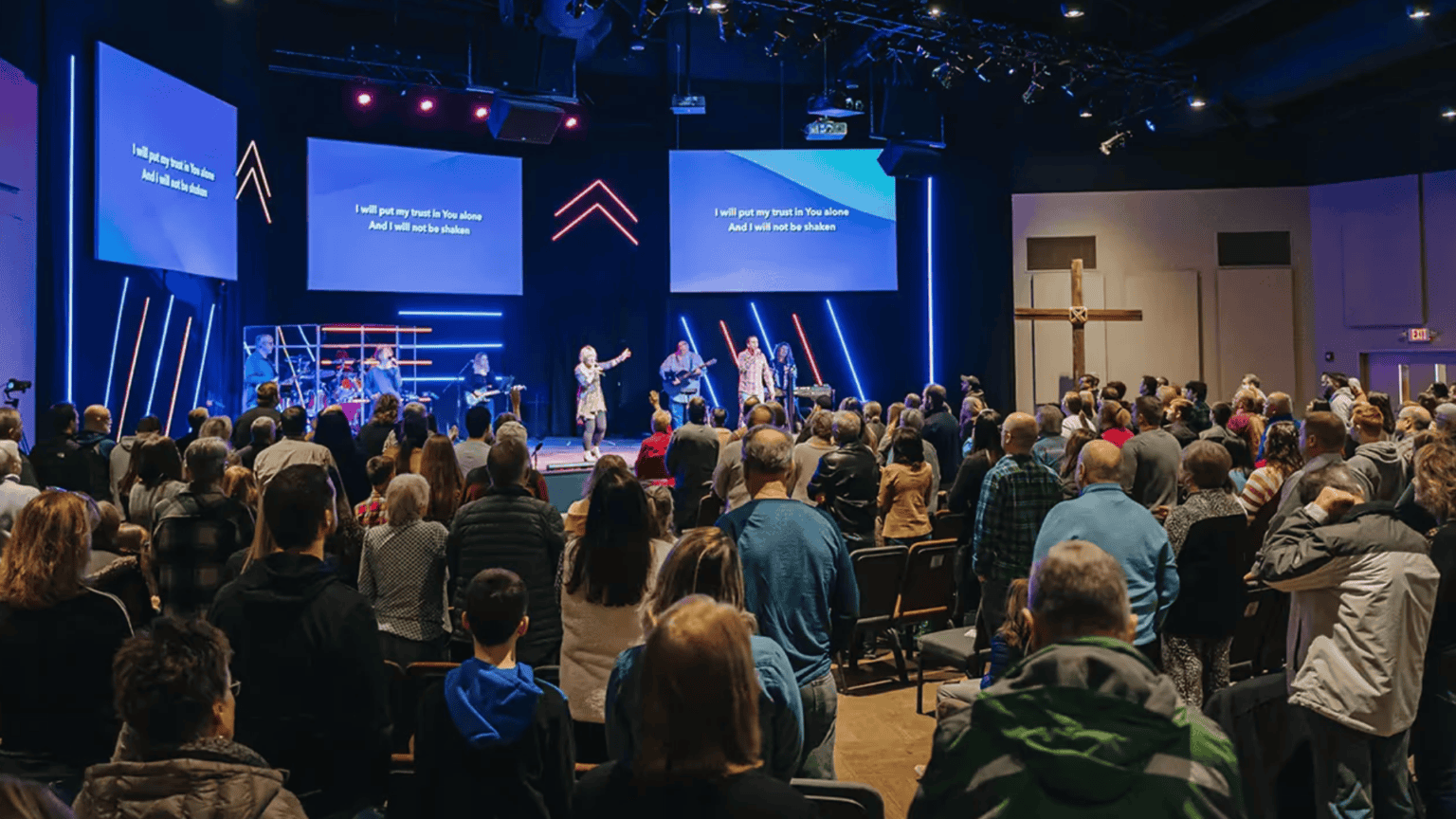
They used to be Crossroads. Christy told me the change was about reinforcing discipleship. In most churches, groups are an option on the menu when they should be the featured item. But The Table Church wanted to be a church of groups, not a church with groups.
“You can change by evolution, or you can change by revolution. Changing the name was the revolution.”
The Table Church made a decision that was costly in more ways than one, but it shifted their culture in a healthier direction. And sometimes to move the cultural needle, you have to do something massive.
I don’t believe every church has to change their name for this to work. But I do think churches that feel stuck should be asking: what’s our revolution going to be? In other words, what decision can we make or what change can we bring that’s going to tell our church and our community that we’re serious?
Defining Groups: Up, In, and Out
I had to ask Christy a question I get all the time, especially from churches that are serious about groups. How do you define a group?
She started with the body. The cell is the basic building block. And a healthy group, she said, is Up, In, and Out.
- Up is prayer and worship. It’s practical, and it’s focused on Scripture.
- In is caring for one another. That’s what people do naturally when they gather.
- Out is who you’re inviting. Their groups identify specific mission fields to connect with.
When a group only looks inward, they become cliches. But when there’s a mission involved that’s focused on the Great Commission, it keeps the groups thinking bigger. When groups are missional, they have an outward, serving focus built in from the start. And when people are on a mission together, they actually build relationships more effectively.
It helps not just to be on a mission together but also to have clarity on each person’s role in the mission. Is it the leader’s job to lead every time? Do we rotate leadership or share leadership? Do host homes rotate so everyone has a chance to practice hospitality, which is biblical? Is it the leader’s job to care for the needs in the group or does every group member understand they have a shared responsibility to each other? Will the group serve together somehow?
Clarify what they want to see from their groups – what are the markers and the goals of a healthy group, and what do they produce?
Groups Can Be Another Front Door
Christy said that now that they’re connecting people in relationships and on mission together, groups have become another front door for their church.
She told me about Brandon and Nicole, a young couple who weren’t attending church anywhere. They became friends with some people from The Table Church who lived in their neighborhood, and those neighbors invited them to a Table Group. They started attending the group. Then they went through Step One, the church’s equipping track toward membership. Then they took an even bigger step and went to dinner at the pastor’s house.
And they did all of that before they ever attended a weekend service.
I love that story because it breaks pretty much all of our discipleship diagrams. When we map out a pathway or next steps process, “groups” usually come after “attend”. We design pathways assuming the starting point is the sanctuary or auditorium.
But we’re hearing more and more stories of churches who are getting it right in this area by realizing that a healthy discipleship journey more often than not starts at a dinner table.
Next Steps
The Table Church has proven that you can change this culture without blowing everything up. So leaders, what shift might be next for you that will help you live out your mission?
If you need help figuring this out, this is what we do at The Unstuck Group. We would love to walk with you as you navigate your next steps with your discipleship pathway and your plan to reach people and connect them to your church. Let’s talk.



Leave a Reply